Chapter 1:
The Engine
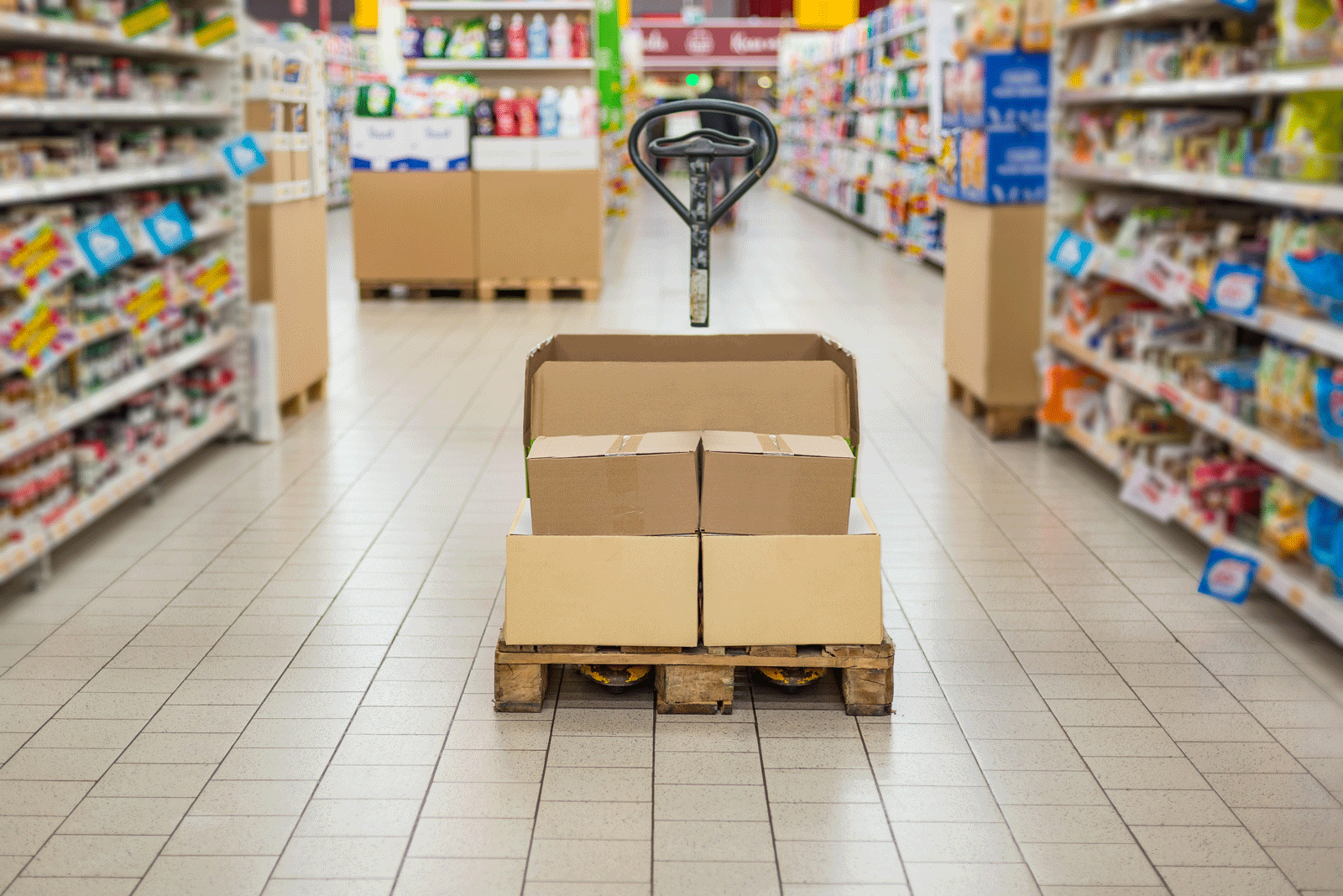
The Engine is designed to solve the problems shoppers hate most: clutter, congestion, and the drag of purely transactional errands.
In our teaser release, we introduced the big idea behind The Store That Works: a vision for grocery stores evolving from passive warehouses into vibrant community anchors. We also unpacked today's grocery shoppers, bringing behavioral clarity to the research driving our point of view.
As shopping shifts from simply purchasing products to experiencing food, the physical environment has to keep up. You can't build a theater on a cluttered warehouse floor.
The Engine is designed to solve the problems shoppers hate most: clutter, congestion, and the drag of purely transactional errands. By moving backend complexity out of sight, we give brands the freedom to show up as effortless, organized, and intentional.
Stop picking from the shelf and start staging from The Engine.
The modern grocery floor is overloaded with three conflicting roles: showroom, stockroom, and fulfillment hub.
Online fulfillment should complement the physical store, not compromise it. When pickers and shoppers are forced into the same narrow lanes, the retail environment shifts from a service-oriented space to a chaotic warehouse, leaving the in-store customer feeling like an afterthought.
A Unified Engine for Modern Grocery
At the core of The Engine is a Unified Inventory, consolidating commodity SKUs into a single pool that supports both in-store shopping and digital fulfillment while freeing up valuable selling space.
A dedicated Core Fulfillment Zone, anchored by a production kitchen, supports high-velocity digital orders without disrupting the in-store experience.
The Fulfillment Bridge extends this system to covered curbside and delivery parking, allowing orders to move seamlessly from preparation to pickup.
The Engine absorbs the mess of logistics upstream, delivering clean, profitable output to the sales floor.
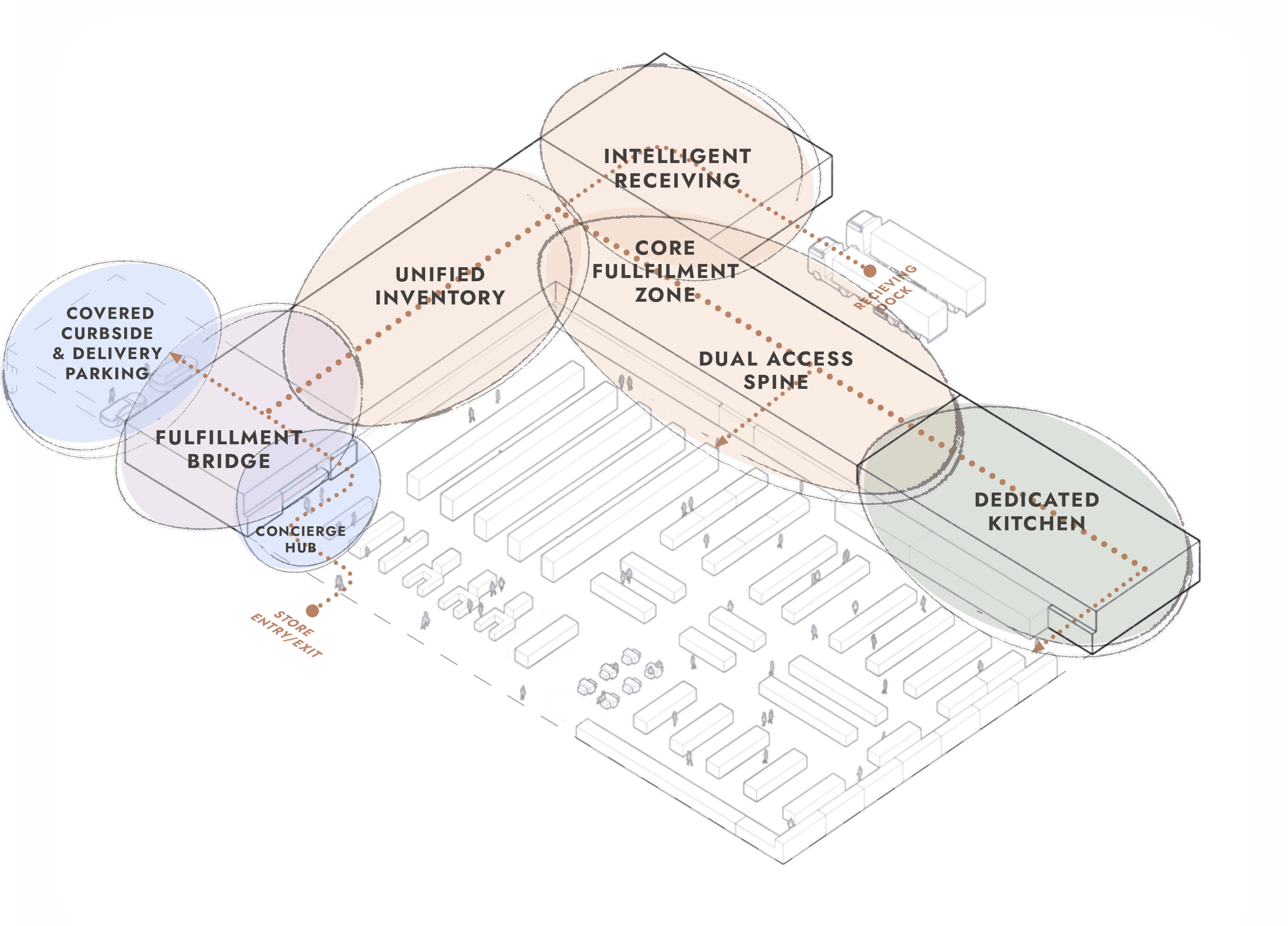
Click on the hotspots to explore each zone
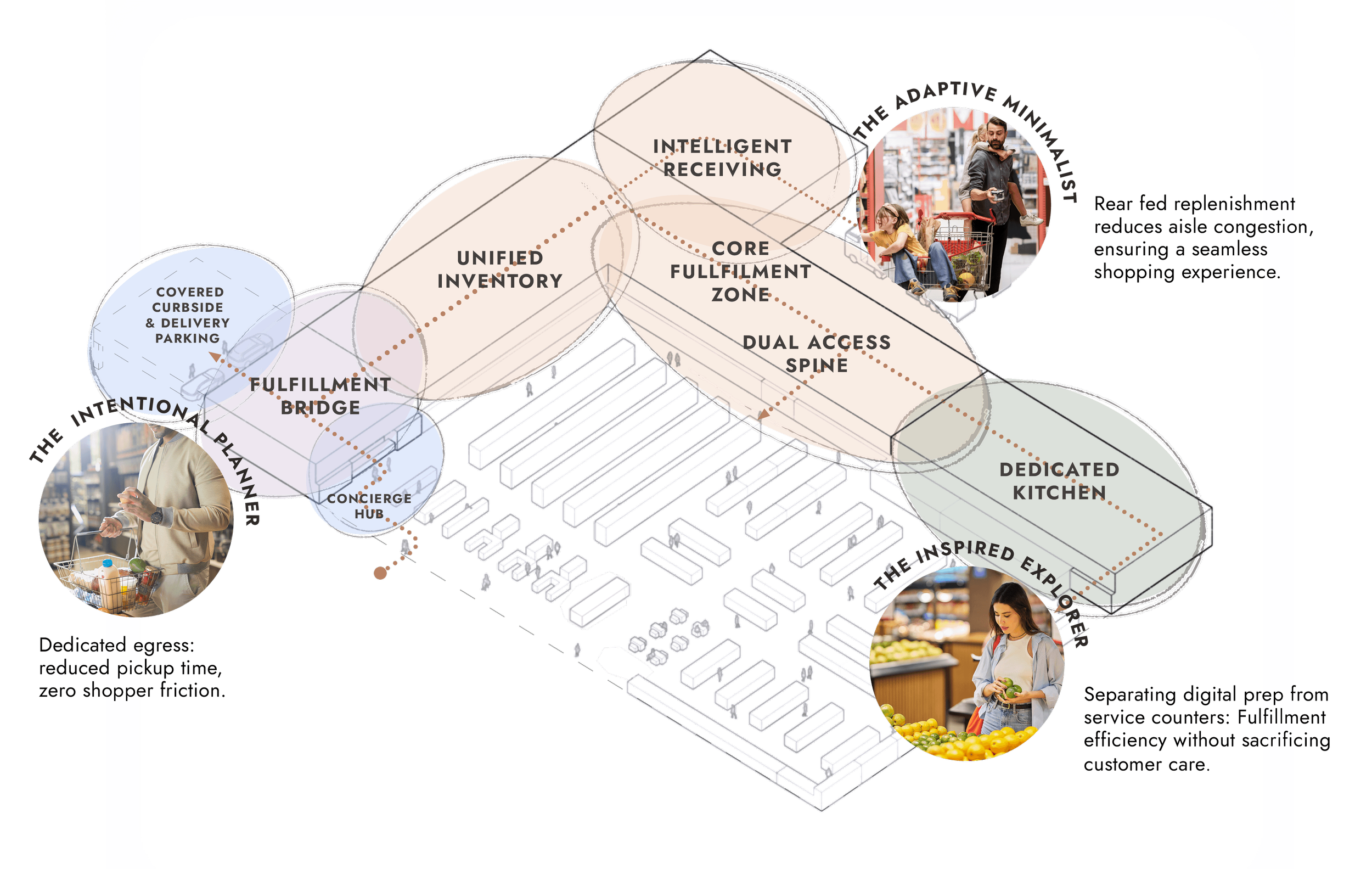
The Engine handles the friction so your store can focus on the shopper experience.
We have designed The Engine.
In The Experience, our next chapter, we define it’s purpose.
You Don’t Need 1,000 Fixes. Just Three.
You Don’t Need 1,000 Fixes. Just Three.
-
Re-engineering the back-of-house to maximize throughput and slash the expense of picking/preparing orders.
-
Compressing the center store to create high-margin, high-engagement “Food Theater” destinations.
-
Fixing the last-mile bottleneck by designing for quick pickup for customers and maximizing staff efficiency.
Authors

Amy Ward
Account Manager, Grocery,
Food & Beverage, IARetail

Carlotta Dove
Director of Consumer Experience & HumanX